
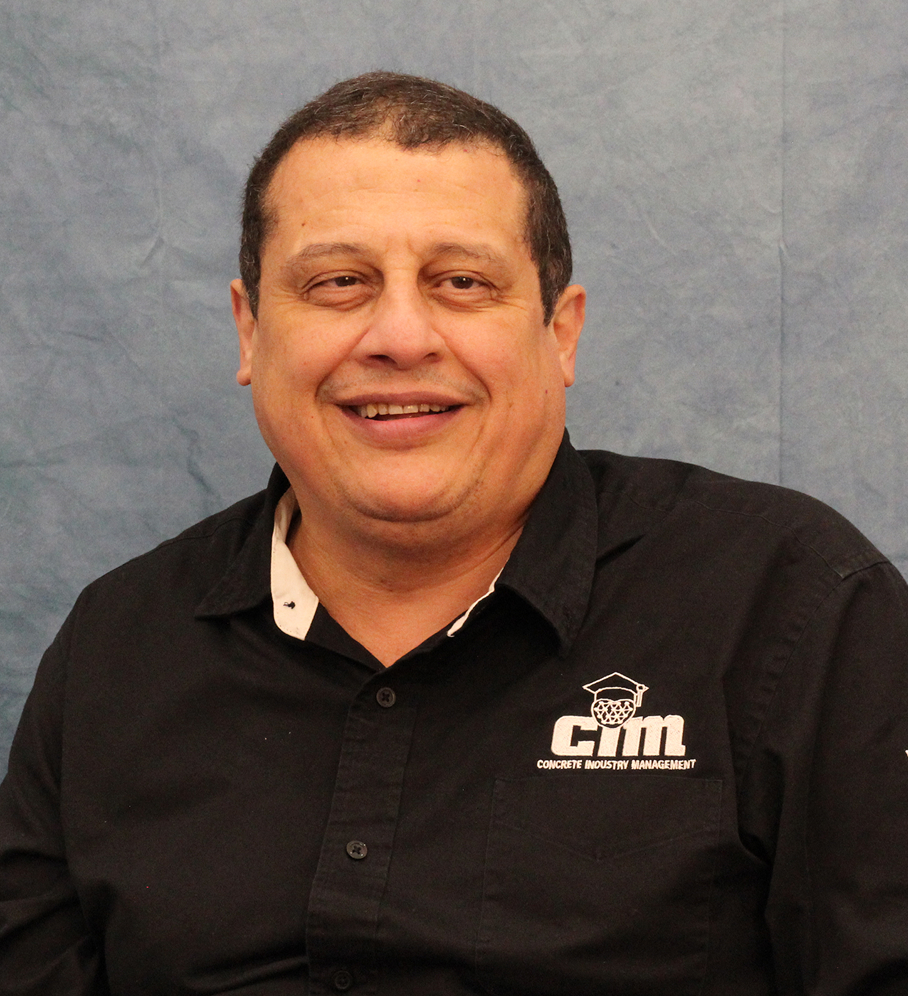
Mohamed Mahgoub
Associate Professor & Program Director, New Jersey Institute of Technology
Which CIM program are you involved with and what are your responsibilities?
I am involved with the Concrete Industry Management (CIM) program at NJIT. My responsibilities include teaching core CIM courses, advising undergraduate students, conducting research in concrete materials and construction practices and coordinating with industry partners to ensure that the curriculum remains relevant to industry needs. I also play an active role in mentoring students, student chapters, supervising projects and competitions and supporting the overall growth of the program.
How did you become involved with this school and the CIM program?
I joined NJIT in Fall 2009 as a faculty member in the Department of Engineering Technology (ET) which is now the School of Applied Engineering and Technology (SAET) now. My involvement with CIM grew naturally from my passion for bridging academia and practice. I was drawn to the program’s unique mission of combining management and technical education in concrete, which aligns with both my academic expertise and my industry outreach.
What interesting projects have your students been involved with during this last school year?
Students worked on several hands-on projects, including developing sustainable concrete mixes with recycled materials, evaluating the performance of fiber-reinforced concrete, and participating in freeze–thaw durability studies. They also took part in regional concrete competitions, conducted field inspections with local industry partners, and contributed to applied research projects that connect directly to real-world construction challenges.
Why should incoming students consider CIM as a major course of study?
CIM offers a rare combination of technical knowledge, business skills, and industry engagement. Students not only learn how to design and test concrete, but also how to manage projects, understand supply chains, and lead within the construction industry. This balanced preparation opens doors to a wide variety of career paths and provides a competitive advantage in the job market. We are at almost 100% job placement.
Can you describe the different career paths that graduates of the CIM program can take?
Graduates have pursued careers in ready-mix concrete production, precast concrete manufacturing, construction management, quality control and assurance, sales and technical support, and materials research. Some move into leadership and executive roles within the industry.
What is unique about the graduates of the CIM program?
Our graduates are distinguished by their ability to combine practical industry knowledge with business acumen. They are career-ready from day one, having benefited from internships, laboratory training and direct interaction with industry leaders. Employers value their problem-solving mindset, adaptability and understanding of both technical and managerial aspects of the concrete industry.
What are your thoughts about the industry/academic partnership between CIM and its industry partners?
This partnership is one of CIM’s greatest strengths. Industry partners guide curriculum development, provide internships, sponsor projects, and often hire our graduates. The constant feedback loop ensures that our program evolves with the needs of the industry, making it highly dynamic and impactful.
What are your thoughts about the partnership between CIM and its Patrons?
The Patrons are essential to the success of CIM. Their financial support, mentorship, and advocacy create opportunities that would not be possible otherwise. They are true partners in education, investing not only in our students but in the future of the concrete industry.
Why should companies in the concrete industry get involved in the CIM program?
Companies gain direct access to a pipeline of well-trained, motivated graduates who are ready to contribute immediately. By supporting CIM, companies also help shape the next generation of leaders, ensuring that the workforce is prepared to meet both current and future challenges.
How does the CIM program benefit the concrete industry?
CIM produces professionals who strengthen the industry by improving efficiency, innovation, and sustainability. Our graduates bring fresh perspectives, technical knowledge, and leadership skills that allow companies to grow and remain competitive in a changing construction environment.
What is your vision for the CIM program?
My vision is to see the CIM program continue to expand its national reputation as the premier source of talent for the concrete industry. This includes strengthening research initiatives, expanding partnerships, and increasing student enrollment. Ultimately, I envision CIM as a model of how academia and industry can collaborate to develop the leaders who will shape the future of the concrete industry.